




Short answer: Choose a medium-voltage drive when a pump uses a medium-voltage motor and the project benefits from lower current, smaller conductor requirements, and a system designed for high-power continuous service. Choose a low-voltage VFD when the motor, switchgear, maintenance resources, and project economics favor a simpler low-voltage system. The correct decision depends on the complete electrical and hydraulic design, not on motor power alone.
What Is the Difference Between a Medium-Voltage and Low-Voltage Drive?
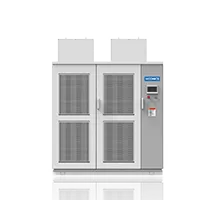
A medium voltage drive regulates the voltage and frequency supplied to a medium-voltage motor. In a pump system, it can match motor speed to process demand, limit starting stress, and support controlled acceleration and deceleration. The drive must be selected as part of the wider system, including the motor, transformer or incoming supply, switchgear, cabling, protection, cooling, and control architecture.
A low-voltage VFD performs the same basic speed-control function at a lower voltage class. It is often easier to source, install, and service for standard pump packages, but higher power at low voltage also means higher current. That current affects cable size, heat, enclosure design, protective devices, and installation cost.
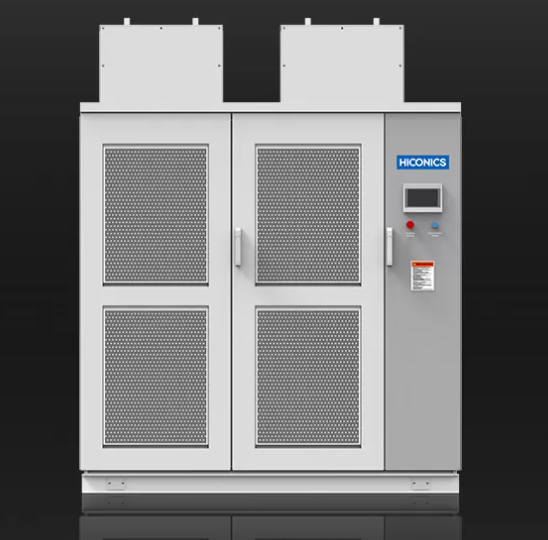
Medium-Voltage Drive vs Low-Voltage Drive: Key Differences
| Decision factor | Medium-voltage drive | Low-voltage VFD |
| Motor and supply | Designed for medium-voltage systems | Designed for low-voltage systems |
| Current | Lower current for the same power | Higher current as power increases |
| Installation | Specialized switchgear, protection, and procedures | More standardized components and service skills |
| Cabling | May reduce conductor requirements on long or high-power runs | Cable size and parallel conductors can become significant |
| Footprint | Drive system and clearances may require more planning | Often compact at modest ratings |
| Footprint | Requires trained medium-voltage personnel | Broader service availability in many markets |
| Footprint | Can improve whole-system economics at high power | Often lower initial complexity for smaller systems |
When Does a Medium-Voltage Drive Make Sense for a Pump?
A medium-voltage solution becomes a strong candidate when the installed motor already operates at medium voltage, the pump runs for long periods, or low-voltage current would create expensive cable and switchgear requirements. It may also suit critical water, mining, power, or process applications where controlled starting, stable operation, and coordinated protection are central to plant availability.
The voltage label alone does not make the system better. Engineers should confirm the available supply, motor insulation, load profile, bypass philosophy, harmonic limits, cooling conditions, and local maintenance capability before selecting the voltage class.
When Is a Low-Voltage VFD the Better Choice?
A low-voltage VFD is usually the practical choice for smaller or standardized pump packages, especially where the site already uses low-voltage distribution and local technicians stock compatible spares. It can reduce project complexity and shorten replacement time. At higher power, however, the design team must check whether current, conductor quantity, enclosure heat, and upstream equipment make the apparently simpler option less economical.
Seven Factors to Consider When Selecting a Pump VFD
Motor data: Record rated voltage, current, power, frequency, speed, insulation class, service factor, and starting method.
Pump duty: Define the flow and head range, operating point, minimum safe speed, and whether the load is centrifugal or positive displacement.
Load profile: Estimate hours at each operating condition. A drive selected only for peak demand may miss the actual energy and thermal profile.
Electrical system: Check fault level, transformer capacity, grounding, protection coordination, and the allowable effect on the plant network.
Cable route: Include distance, conductor size, voltage drop, motor insulation stress, shielding, and installation method.
Environment: State altitude, ambient temperature, humidity, dust, corrosive gases, vibration, ingress protection, and cooling-water availability where relevant.
Reliability and service: Define bypass, redundancy, spare-parts strategy, remote diagnostics, training, and acceptable recovery time.
For a focused explanation of speed control and soft starting in pumping applications, see why VFD is used in pumps.
How Motor Power, Current and Cable Length Affect the Decision
Motor power does not create a universal crossover point between low and medium voltage. Two projects with the same kilowatt or horsepower rating can reach different conclusions because their supply voltage, cable length, starting requirements, duty cycle, and local equipment costs differ. Compare actual full-load current and the installed cost of cables, switchgear, transformers, cooling, and protection. Long cable runs also require a review of voltage drop, reflected-wave effects, insulation stress, and output filtering.
Harmonics, Power Factor and Grid Compatibility
The drive topology and input arrangement influence harmonic current, displacement power factor, and interaction with the power system. The RFQ should state the applicable grid code or harmonic standard and the measurement point. Ask suppliers to provide calculations for the proposed configuration and operating range. Do not assume a catalog statement for one series applies to every voltage, pulse configuration, transformer, or load condition.
Medium-Voltage vs Low-Voltage Drive Cost Comparison
Compare total installed and lifecycle cost rather than drive price alone. Include the drive, transformer, switchgear, cables, civil work, cooling, commissioning, planned maintenance, spares, and the financial effect of downtime. Energy analysis should use the pump curve and expected duty profile. A medium-voltage system may justify a higher equipment cost when it reduces current-related infrastructure or improves availability, while a low-voltage system may win where standardization and service simplicity dominate.
Pump Application Examples
Municipal Water Station
A high-power pump operating continuously over a long cable route may favor medium voltage after the designer accounts for conductor size, switchgear, and operating reliability.
Mine Dewatering
The decision may depend more on cable distance, harsh environmental conditions, restart requirements, and the cost of a stopped pump than on purchase price.
Process Transfer Pump
A standardized skid with moderate power, short cabling, and readily available low-voltage service may favor a low-voltage VFD.
These examples describe selection logic, not fixed design rules. A final choice requires the motor nameplate, electrical single-line diagram, pump curve, operating profile, and site conditions.
Information Required for a Pump VFD Quotation
Motor nameplate and driven-equipment data
Incoming voltage, frequency, fault level, and grounding method
Pump curve, required flow and head range, and minimum speed
Cable length, cable type, installation route, and motor location
Ambient and enclosure conditions, including altitude and cooling
Control signals, communications, interlocks, and protection requirements
Bypass, redundancy, commissioning, training, and spare-parts expectations
Frequently Asked Questions
At What Motor Size Should I Consider a Medium-Voltage Drive?
There is no universal power threshold. Consider motor voltage, full-load current, cable length, switchgear, transformer requirements, duty cycle, maintenance resources, and lifecycle cost. Local standards and utility requirements can also affect the decision.
Can a Low-Voltage VFD Control a Medium-Voltage Motor?
Not directly in a normal installation. A transformer-based arrangement may be technically possible, but voltage conversion, insulation stress, protection, harmonics, and overall economics must be engineered as one system. A purpose-built medium-voltage drive is often the clearer approach.
Which VFD Is More Efficient for Pumps?
The answer depends on the drive topology and operating point. More important, evaluate the efficiency of the complete pump system across its duty profile. Matching speed to demand can reduce throttling losses, but actual savings require pump-curve and process data.
Does a Medium-Voltage VFD Require a Transformer?
It depends on the available supply and the drive input design. Some projects use an isolation or phase-shifting transformer as part of the drive system, while others connect differently. Confirm the proposed topology with the supplier and site electrical designer.
What Information Does a VFD Manufacturer Need for Selection?
Provide the motor nameplate, supply data, pump curve, operating profile, cable details, environment, control and communication requirements, harmonic limits, protection philosophy, and service expectations. Complete input data reduces quotation assumptions and redesign risk.
Need a project-specific selection? A useful quotation should identify the assumptions behind the voltage class, topology, accessories, and lifecycle-cost comparison. Prepare the RFQ data above, then contact Hiconics to discuss the proposed motor and pump system with the application team.

